Eco-Friendly Hedge Trimming Bayswater — Recycling & Sustainability
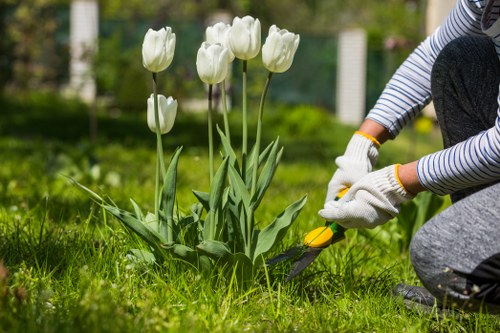 Hedge Trimming Bayswater services are evolving to place sustainability at the heart of every job. Our approach to hedge maintenance in Bayswater prioritises an eco-friendly waste disposal area and a practical, low-impact sustainable rubbish gardening area that reduces landfill, supports local circular reuse networks and respects borough waste separation rules. Whether you search for hedge trimming in Bayswater or local Bayswater hedge trimming options, the focus is on keeping green waste out of the general waste stream and returning nutrients to the urban landscape wherever possible.
We treat each cut branch and ribbon of clippings as a resource, not refuse. Our crews sort clippings, woody stems and soil separately at the point of collection so that local transfer points can receive well-separated loads. This improves the value of materials when they reach recycling centres and community compost hubs. The result is a measurable reduction in emissions from waste processing and a higher recovery rate for organic materials. Using techniques aligned with neighbouring boroughs' approach to waste separation (glass, paper, food, green waste and timber kept distinct), our Bayswater hedge care teams help make municipal sorting more efficient.
 Targets and metrics are central to our sustainability plan for hedge maintenance Bayswater-wide. We have set an ambitious recycling percentage target: to recycle or repurpose 75% of horticultural waste from every job and achieve an overall recycling rate of 70% for materials generated by garden clearance activities within 24 months. Achieving this relies on structured collections, good on-site separation, and strong partnerships across the local waste infrastructure.
We work closely with nearby local transfer stations to smooth the path from curbside to compost or reuse. Loads are delivered to borough transfer stations such as the Westminster and Kensington transfer facilities and to authorised waste transfer sites in West London that accept green waste, soil and untreated timber. By consolidating green waste and taking it directly to facilities prepared to accept segregated loads, we cut double-handling and lower the carbon footprint associated with intermediate sorting.
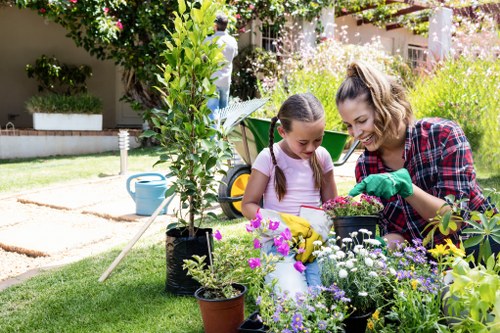 Partnerships with charities and community projects form a core part of our model. Garden materials that are fit for reuse — plant pots, undamaged paving, good timber and usable topsoil — are diverted to local community gardens, urban farms and charitable reuse centres rather than being shredded for low-grade mulch. We maintain active relationships with neighbourhood community projects and charitable reuse organisations to donate functional items and to supply compost to community allotments and food-growing initiatives in the area.
To further embed sustainability into hedge trimming Bayswater operations, we have implemented logistics and equipment choices that reduce emissions. Our fleet includes low-carbon vans — a mix of fully electric and plug-in hybrid vehicles — used for short urban trips and lightweight green waste runs. Further reductions come from route optimisation software, consolidated job scheduling and smaller, more efficient tools that avoid unnecessary fuel consumption. The combined effect is a quantifiable cut in fleet-related emissions for Bayswater hedge trimming and related garden clearance services.
To make our commitments concrete we publish a simple list of operational standards and goals that guide each crew on site:
- Recycling percentage target: 75% of garden/hedge waste recycled or repurposed; 70% overall diversion rate within two years.
- Accepted materials at transfer stations: segregated green waste, untreated timber, soil, compostable plant material and recyclable pots.
- Charity partnerships: donate reusable items and supply compost to community allotments and food-growing projects.
- Low-carbon fleet: electric vans for short runs, plug-in hybrids for heavier jobs, and biodiesel where EVs are unsuitable.
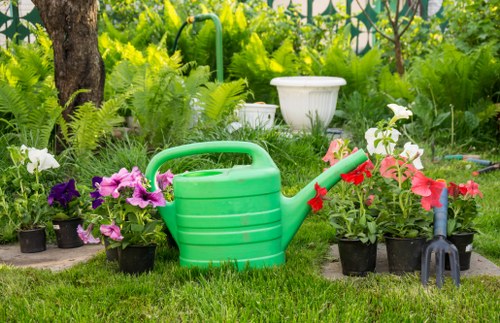 We also run a practical on-site separation system so clients see how materials are handled. Branches and woody cuttings are kept apart from leafy clippings; pots, netting and plastic are bagged separately for recycling or reuse; large combustible material is assessed for reuse or energy recovery only where appropriate. This level of care reflects best practice for hedge maintenance Bayswater residents expect when prioritising an eco-friendly waste disposal area at their properties.